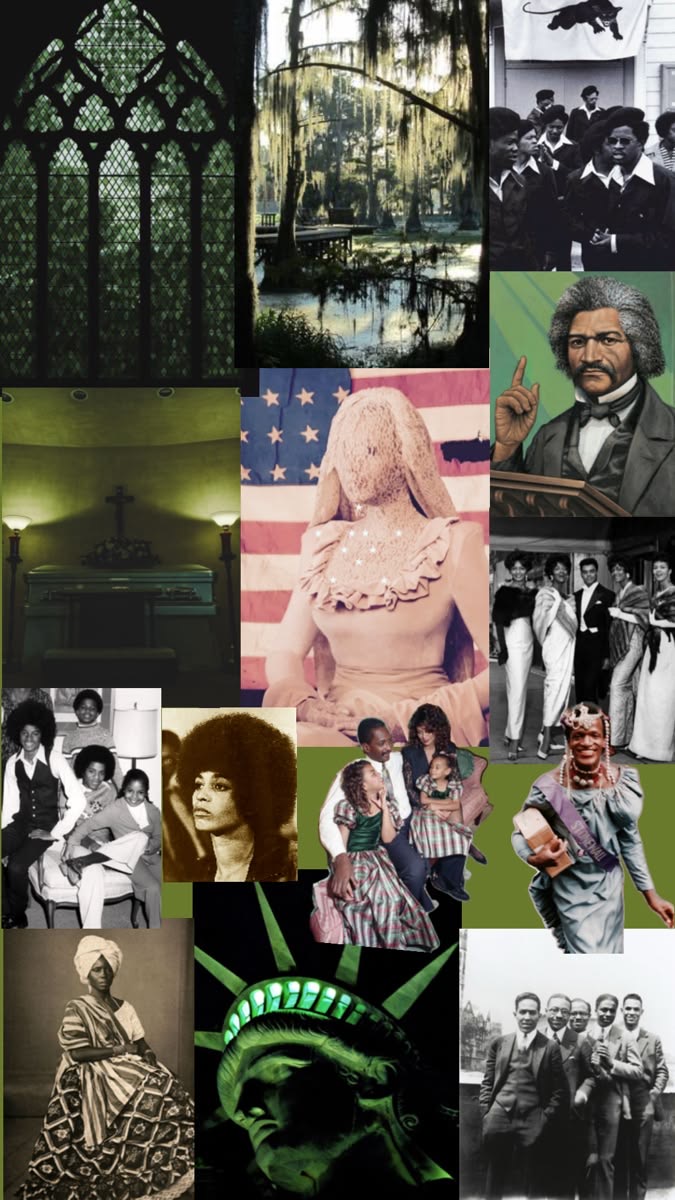
On behalf of the two-year anniversary of Cowboy Carter and the anticipation of Beyoncé's Act III, I have decided to do a deeper dive into the album. The introduction to my series "Bey-ology" was posted here on my blog:
http://www.theworldaccordingtomyalgorithm.com/2026/03/bey-ology-why-cowboy-carter-matters.html
Cowboy Carter is not only an album; it defies the status quo of being a Black woman in a predominantly White, male-dominated music genre. The album is also an unaltered history book of the real history of country music, Black history, and the conversation of the American Dream being a nightmare that “Ameriican Requiem” highlights.
Introduction
Cowboy Carter begins with one of the most powerful introductions to this album, outlining what it entails and its purpose. When the album was released in 2024, people felt that Beyoncé was paying homage to the United States and that it was patriotic with the use of the American flag on the cover; however, the album focuses on the reclamation and recognition of Black American culture. The first song, “Ameriican Requiem,” begins with a church organ and a harmonized choir.
"Nothin' really ends. For things to stay the same, they have to change again. Hello, my old friend. You change your name, but not the ways you play pretend."
"Nothin' really ends. For things to stay the same, they have to change again. Hello, my old friend. You change your name, but not the ways you play pretend."
The quote, "for things to stay the same, they have to change again," is from the book The Leopard, written by Giuseppe Tomasi di Lampedusa, and could be interpreted to mean that stagnation is not possible if one wants things to remain the same. Life itself is always evolving; our societies, systems, and structures must all change, as no adjustment could lead to the collapse of it all. This quote reminded me of a building project—yes, you can build above the foundation, but if it is not maintained as time progresses or if the necessary changes are not made, the foundation will collapse, for it is no longer sustainable.
"You change your name, but not the way you play pretend" could correlate to the United States or a person constantly changing their name in order to align their identity with something personal, like rebranding. Although a name change could create a new start, your actions still remain the same. For the purpose of this essay, I will highlight the American system that has rebranded itself numerous times but still faces the issues of systemic oppression, gun control laws, labor laws, medical expenses, expensive college tuition, and the increase in housing costs. Ultimately, changing the name of America, both literally and figuratively, does not change the misconception of the American Dream.
"Hello, my old friend"—this greeting shows that America is still recognizable even though its name and concept have changed. I also thought that this line had a bittersweet tone, for though it's a goodbye song, calling America a friend still makes the audience and Beyoncé think of the good times or the good relationship that was once had.
American Requiem. Them big ideas (yeah) are buried here (yeah). Amen.
America is well known as the land of opportunities for both American citizens and immigrants. Being that a requiem is typically performed during a funeral, the dreams are also buried along with what we would have imagined life would be. It is also important to note that each statement is followed with a collective "yeah," which could symbolize the agreement of the pulpit or the audience, whose perception of America and the plans they had have changed.
It's a lot of talkin' goin' on
While I sing my song
Can you hear me?
I said, "Do you hear me?"
Looker there, looker there, now
Looker there, looker there
Looker-looker, looker there, looker there
Looker-looker, looker there, looker there
Looker-looker, looker there, looker there (oh, yeah)
Looker-looker, looker there, looker there
It's a lot of chatter in here
But let me make myself clear (oh)
Can you hear me? (Huh)
Or do you fear me? (Ow)
In the first verse, Beyoncé notices that people were talking, which could signify a lot of things, like the state of the country or where it's heading, celebrity gossip, and the discussions surrounding Cowboy Carter. She then proceeds to ask if people can hear her as a way to receive their undivided attention. People are distracted and are not hearing her song, and it feels like she is doing a microphone check to ensure that people can hear her. Can you?
Beyoncé then tells people to look over there, leading the audience to observe what is going on around them. Similar to the idea of this album, people are distracted by the concept of her doing country music and not the purpose of the album: the reclamation of a genre created by Black people. The album, in its entirety, is an Easter egg for historians.
The change from the use of “talking” to “chatter” could signify that talking is a general term for exchanging ideas or communicating, while chatter refers to fast, informal, often trivial, or continuous talking. People are talking faster without any substance and are not having an extensive conversation about what has happened to America. Beyoncé continues to ask if we can hear her throughout the chatter.
Numerous listeners have noticed how the song resembles the 1967 song "For What It’s Worth" by Buffalo Springfield.
There's something happening here. What it is ain't exactly clear. There's a man with a gun over there. A-telling me I got to beware. I think it's time we stop. Children, what's that sound? Everybody, look what's going down.
Similar to the song, Beyoncé is telling us to stop, look, and look around. Even though there is no sound, a threat could also be silent (laws, policies, etc.). She still tells the audience to be the same as Buffalo Springfield.
Can we stand for somethin'? Now is the time to face the wind (Ow).
Comin' in peace and love, y'all.
Oh, a lot of takin' up space.
Salty tears beyond my gaze.
Can you stand me?
(Can you stand me? Can you stand me? Can you stand me?) Ooh, ah.(Can you stand me? Can you stand me? Can you stand me?) Can we stand?
(Can you stand me? Can you stand me? Can you stand me?) Can you stand with me?
Can we stand for somethin'?
Now is the time to face the wind
The quote "united we stand, divided we fall" comes to mind. If we, the people, stand together, we can face the strong winds and survive any storm. If we do not have the support we need from each other, it becomes easier to fall. This could also be interpreted as people looking in the other direction the wind is blowing because they do not want to deal with its strength, but it is important to face our fears and fight the wind head-on.
“Take up the space" means that everyone belongs where they are, whether it is in an apartment, a job, or the United States itself. Never apologize for being who you are (unless you're a horrible person). The salty tears of pride or hope appear after experiencing an exponential amount of grief. Beyonce encourages people and asks if they can stand with her. When she repeats the lyrics, she wants people to listen, look, and understand.
Now ain't the time to pretend
Now is the time to let love in
Thinkin' to myself (thinkin' to myself)
Oh, it's a lot of talkin' goin' on (oh)
While I sing my song (yeah)
Do you hear me when I say?
Do you hear me when I say? AhLooker there, looker there Looker, look Looker-looker-looker-looker-looker Looker-looker there, looker there L-l-l-l-l-l-l-l-l-l-looker there Oh, looker there, looker there Looker there, looker there (Can you stand me? Can you stand me? Can you stand me?)
L-l-l-l-l-l-l-l-l-l-l………………………
The song then transitions to a late-1960s to 1970s psychedelic song, and Beyoncé embodies Janis Joplin, Tina Turner, and Jimi Hendrix—artists who stood against the status quo. As previously mentioned, she talks about America’s way of pretending and tells us that American citizens can no longer pretend and must see what is happening to us and others. She later realizes that her effect of getting people talking, not chatting, is coming into fruition. In this verse, she changes from grief to pride and acknowledges that her song is making a change. The more people are having conversations about what is going on, the more she points and tells them to look more. This kind of feels like the audience is having an awakening, and she reminds them that united we stand, divided we fall.
Together, can we stand?
Looker there, looker in my hand
The grand baby of a moonshine man
Gadsden, Alabama
Got folks down in Galveston, rooted in Louisiana
They used to say I spoke, "Too country"
And the rejection came, said I wasn't, "Country 'nough"
Said I wouldn't saddle up, but
In the bridge, she adopts a Baptist preacher voice while explaining who she is as a Black Southern woman and those who came before her. Beyoncé's grandfather, Davis Hogue (hint: Sir Davis), was a moonshiner during the Prohibition era. Beyoncé's father, Matthew Knowles, is from Gadsden, Alabama, and her mother, Tina Knowles, is from Galveston, Texas, with Louisiana Creole heritage.
In previous interviews, Beyoncé spoke with a heavier Texan accent and was told that she couldn't articulate well. Due to this criticism, she began media training, and throughout the years, you can see her pronouncing her words more thoroughly. Then, when she performed at the Country Music Awards with The Chicks, people rejected her deeply rooted Southern background. As a response to them stating that she could not do country, she took it as a challenge to create a country-inspired album.
If that ain't country, tell me, what is?
Plant my bare feet on solid ground for years
They don't, don't know how hard I had to fight for this
When I sing my song
The tone of the song then slows down for the audience to digest and think about the question, “If that ain't country, tell me, what is?” If Beyoncé has a long lineage in the South, had a heavy Texan accent, and had the talent to sing country, why is it that she is not country enough for the genre? I must also note that Taylor Swift was considered a country artist even though she is from Reading, Pennsylvania; Shania Twain is from Canada; and Keith Urban is from New Zealand. Beyoncé has had an active career for almost three decades, although people recognize her as “Single Ladies” Beyoncé but not as Girls Tyme or Destiny's Child Beyoncé. She has been in the industry for decades, toured numerous countries that some have never been to, has created charting albums for every comeback, made various collaborations, has expanded into almost every genre there is, keeps up her stamina by jogging in heels while singing, and has been recognized by legendary artists (Whitney Houston, Michael Jackson, Prince…). Only for her to be dismissed as an overrated R&B singer. When she sings her songs, she wants people to know how hard not only she had to fight but also her ancestors (Jim Crow and slavery) to become one of the top-charting artists every decade since her debut.
(When I sang the song of Abraham) / (When the angels guide and take my hand)These lyrics did not appear on Apple Music; however, I still found them interesting and wanted to take a stab at them. The song begins to descend from the climax and mentions the song of Abraham. I had to do a little bit of digging and found “Song Blessings of Abraham.” The lyrics include the following:
Wherever you are, where er' you go. Whatever you touch is anointed to grow. You are the seed, by faith, receive. The Blessing of Abraham
In a way, American Requiem feels like it was created to remind listeners that they are “anointed”—set apart or chosen for a purpose. The album encourages personal growth, suggesting that the effort we put into our lives will be rewarded. Through the ideas and messages incorporated throughout the project, listeners are encouraged to step into that sense of purpose and trust that blessings will follow the work they invest.
Goodbye to what has been
Pretty house that we never settled in
A funeral for fair-weather friends
I am the one to cleanse me of my Father's sins
American Requiem
Them big ideas (yeah) are buried here (yeah)
Amen
We have now circled back to the beginning, where we are saying goodbye to the idea of America (the house with the picket fence). The use of the phrase “fair-weather friends” could represent the people or the concept of America, ultimately describing something or someone who supports you during good times but is nowhere to be found during troubling times. The lyric “I am the one to cleanse me of my Father's sins” has different interpretations, which could be:
- Sins of the founding fathers
- Sins of the colonizers who abused and impregnated enslaved women
- Sins of Boomers and Baby Boomers who are complicit to racism, sexism, and capitalism
I thought that it was interesting that she used informal words throughout the song and toward the end of the song. It reinforces that she's still a “small-town” or suburban country girl regardless of her current status in society. “The American Dream is buried here” is the final recognition that we must move on from what we once knew or thought of America. The song then ends like a hymn and then speeds up. Some think it's a continuation of the alien concept from Renaissance; however, if the album plays on loop, “Amen” fades into “Ameriican Requiem.”
Overall, Ameriican Requiem is one of my favorites on the album for the simple fact that it is an emotional rollercoaster that represents Beyoncé as a Black artist, as a Southern woman, and as a Black American. If you enjoyed this opinion, has this changed your perspective on the album, Beyoncé, or America? Please look forward to more Bee-ology.
Comments
Post a Comment